Showing posts sorted by relevance for query bose and einstein. Sort by date Show all posts

Sunday, March 23, 2025


Einstein and IYQ25

Pioneers of Quantum Theoretical Physics

 Part 2 

"Einstein was not merely a scientist; he was a revolutionary thinker who reshaped the very foundations of our understanding of the universe."

Michio Kaku, describing Einstein’s transformative influence.


UNESCO has proclaimed 2025 as the International Year of Quantum Science and Technology (IYQ). This year-long, worldwide initiative will celebrate the contributions of quantum science to technological progress over the past century, raise global awareness of its importance to sustainable development in the 21st century, and ensure that all nations have access to quantum education and opportunities.

In celebration of IYQ25, this series of articles focuses on the key personalities of quantum theoretical physics and their work – ten of the greatest, from Planck to Feynman. The first article (see here) focused on the background to IYQ25 and the advent of quantum theory through the pioneering work of Max Plack. This is the second one – on Einstein and his contributions to the quantum revolution.


Einstein and his place in history

In 1999, TIME magazine enshrined Albert Einstein as the Person of the Century (see picture above), recognizing his unparalleled influence on science, philosophy, and global history. His selection over other notable figures, such as Gandhi and Roosevelt, reflected his profound impact on our understanding of the universe. Einstein's contributions were deemed timeless and universal, making him the most fitting choice for the extraordinary honor.

A byword even outside the realm of science and one of the most celebrated personalities in human history, Albert Einstein (1879 – 1955) revolutionized our understanding of the most fundamental concepts of science, including matter and energy, space and time, gravitation, etc. His achievements and their impact on human knowledge are unparalleled since the times of Isaac Newton (1643 – 1727). His contributions span the development of special and general relativity, quantum theory, statistical mechanics, and cosmology. While he is most famous for the theories of relativity, his seminal work in quantum physics laid the foundation for many aspects of modern quantum science, yet he remained deeply skeptical of its philosophical implications, particularly the probabilistic and observer-dependent nature of the Copenhagen Interpretation (to be discussed in greater detail in future articles of this series).

Here we explore Einstein’s life, his contributions to quantum physics, and his unhappiness with the dominant interpretation of quantum mechanics.

First, let us merely summarize Einstein’s notable contributions to other areas of physics before focusing on his pioneering work in quantum physics.

1. Special Relativity (1905)

In his annus mirabilis (‘miracle year’) of 1905, Einstein formulated the theory of special relativity, which redefined our understanding of space and time, as also of matter and energy. It had just two key postulates that were to ‘transform our understanding of the universe’ as Michio Kaku put it – on both microscopic and macroscopic scales. They were:

    (a) The laws of physics are the same for all inertial observers.

    (b) The speed of light is constant in all inertial frames.

[An inertial frame is a frame of reference in which the laws of inertia, i.e., newtons laws of motion, are valid. The Earth as a frame of reference is an example, although not in the strictest sense of its definition.

While the first postulate seems to be all that one might expect from common sense, the second is certainly not so, leading to several counterintuitive situations that could be experimentally validated.]

They led to groundbreaking results such as time dilation, length contraction, and the famous energy-mass equivalence equation:

E = mc2

[This essentially means that a small amount of mass m can be converted into a large amount of energy E under the right conditions, such as in an atom bomb or nuclear reactor. The speed of light c has the value 2.9979 x 10⁸ m/sec.]

2. General Relativity (1915)

Einstein extended relativity to include gravitation, showing that gravity is not a force (as Newton described it) but rather the curvature of spacetime caused by mass and energy [We live in a four-dimensional world, with three dimensions of space and one of time]. This was to pave the foundation for modern Cosmology and our understanding of the macroscopic universe. Without going into any explanations, his results can be neatly summarized mathematically in the form of a tensor equation as:

Here, the Einstein Tensor Gμν represents the curvature of spacetime due to gravity, the second term is the cosmological constant introduced by Einstein to allow for a static universe (his ‘biggest blunder’!), Tμν is the energy-momentum stress tensor. G is the gravitational constant and c, the speed of light in vacuum.

[This is not the place for details of what this is and how this was arrived at, except to observe that Einstein’s Nobel Prize winning contributions on the photoelectric effect and the photon concept pale into relative insignificance compared to his theories of Special and General Relativity.]

In contrast, the much simpler, and certainly more famous, Newton’s law of gravitation can be stated as:

Here, F is the gravitational force between two objects of masses m1 and m2, separated by a distance r.   The gravitational constant G has the value 6.6743 x10⁻¹¹ m3 kg-1 s-2.

3. Brownian Motion (1905)

Einstein provided a mathematical explanation for Brownian motion (the random movement of particles in a gas or liquid caused by collisions between particles and the atoms or molecules in the fluid, observable through a microscope), offering strong evidence for the existence of atoms and molecules. This work helped confirm kinetic theory and classical statistical mechanics. Jean Perrin’s experiments on Brownian motion, which won him the Nobel Prize in Physics in 1926, provided the supporting empirical evidence.

4. Stimulated Emission and the basis for Lasers (1917)

Einstein introduced the concept of stimulated emission, a principle underlying the functioning of lasers that were operationally realized decades later. He predicted that atoms could emit photons when influenced by external electromagnetic radiation, a fundamental idea later used in laser technology.

Einstein’s Contributions to Quantum Physics

The Photoelectric Effect and the Birth of Quantum Theory

The photoelectric effect, first observed by Heinrich Hertz in 1887 and later studied in detail by Philipp Lenard* and others, involves the emission of electrons from a material when it is exposed to light. Classical physics, primarily based on Maxwell's electromagnetic theory and the wave theory of light, faced insurmountable difficulties in explaining the experimental observations of the photoelectric effect. These were ultimately resolved by Einstein's photon theory in 1905, which generalized the concept of quantized light energy first employed by Planck (see here).

[*Notwithstanding his Nobel Prize winning work that led to profound consequences in the hands of Einstein, Lenard was a rabid opponent of almost everything that Einstein did and stood for. He was also a staunch supporter of Hitler and champion of ‘Nazi German Physics’.]

Experimental Background

In experiments on the photoelectric effect, light is shone onto a metal surface (see diagram of an experimental setup below), and the properties of the emitted electrons (called photoelectrons) are measured. Key observations include:

1. Threshold Frequency: Electrons are only emitted if the light frequency exceeds a certain threshold, regardless of the light's intensity.

2. Instantaneous Emission: Electrons are emitted almost instantaneously when the light strikes the surface, with no detectable time delay.

3. Kinetic Energy of Electrons: The maximum kinetic energy of the emitted electrons depends on the frequency of the light, not its intensity. Higher-frequency light results in higher-energy electrons.

4. Intensity Dependence: The number of emitted electrons increases with the intensity of the light, but their maximum kinetic energy does not.


Difficulties faced by Classical Physics

Classical wave theory of light, which treats light as a continuous electromagnetic wave, could not adequately explain these observations:

1. Threshold Frequency: According to classical theory, the energy of a wave is proportional to its intensity (amplitude squared). Thus, even low-frequency light should eventually emit electrons if the intensity is high enough. However, experiments showed that no electrons are emitted below a certain frequency, regardless of intensity.

2. Instantaneous Emission: Classical theory predicted that electrons would need time to accumulate energy from the light wave before being emitted. However, experiments showed that emission occurs instantaneously, even at very low light intensities.

3. Kinetic Energy Dependence: Classical theory suggested that the energy of emitted electrons should depend on the intensity of the light, not its frequency. However, experiments showed that the kinetic energy of electrons depends on the frequency, not the intensity.

Einstein's Photon Theory

In 1905, Einstein proposed a revolutionary explanation based on an extended application of Max Planck's quantum hypothesis. He suggested that light is composed of discrete packets of energy called photons, each with energy E = , where h is Planck's constant and ν is the frequency of the light. This theory resolved the difficulties as follows:

1. Threshold Frequency: Electrons are emitted only if the energy of a single photon exceeds the work function φ of the material, which is the minimum energy required to eject an electron. This explains why light below a certain frequency cannot emit electrons, regardless of intensity.

2. Instantaneous Emission: Since energy is delivered in discrete packets (photons), an electron can be emitted immediately if it absorbs a photon with sufficient energy. No time delay is needed for energy accumulation.

3. Kinetic Energy Dependence: The maximum kinetic energy of the emitted electrons is given by Kmax = - φ. This directly links the energy of the electrons to the frequency of the light, not its intensity.

4. Intensity Dependence: The intensity of light determines the number of photons, and thus the number of emitted electrons, but not their individual energies. This explains why increasing intensity increases the number of electrons but not their maximum kinetic energy.

Einstein's photon theory provided a complete and accurate explanation of the photoelectric effect, aligning perfectly with experimental observations. It also marked a significant step in the development of quantum mechanics, challenging the classical wave theory of light and introducing the concept of wave-particle duality. For this work, Einstein was awarded the Nobel Prize in Physics in 1921 (overlooking his vastly more important contributions through Relativity). The photoelectric effect remains a cornerstone of modern physics, demonstrating the quantized nature of light and energy.

Before discussing Einstein’s other significant contributions to quantum physics let us look at the man and the times he lived in.

Early Life

Albert Einstein was born on March 14, 1879, in Ulm, Germany, to a Jewish family. His father, Hermann Einstein, was an engineer and businessman, and his mother, Pauline Einstein, was a pianist. As a child, Einstein was curious but slow to speak, leading his parents to worry about his intelligence.

At age 5 (see his stunningly handsome picture below), young Einstein was fascinated by a pocket compass his father showed him, sparking his lifelong interest in physics and unseen forces. By age 10, he was deeply influenced by science and philosophy books, including works by Euclid and Kant. Both his looks and his academic interests stayed with him well past his most productive period in life. 

Einstein attended Catholic elementary school in Munich but struggled with its rigid, discipline-focused system.  At Luitpold Gymnasium (now Albert Einstein Gymnasium), he excelled in mathematics and physics but disliked rote learning and strict teachers.

In 1894, his family moved to Italy, but Einstein stayed behind to finish school. In 1895, at 16, he failed the entrance exam for the Swiss Federal Polytechnic School (ETH Zurich), doing well in mathematics and physics but poorly in languages and other subjects. He then attended Aarau Cantonal School (Switzerland) to improve his grades.

In 1896, at age 17, he passed the entrance exam and joined ETH Zurich, where he later studied physics and mathematics.

He disliked formal lectures and often skipped classes, preferring to study independently. His classmate Marcel Grossmann (who later helped him with advanced mathematical concepts) took notes for him.

Despite being brilliant in mathematics and physics, he was seen as a rebellious student who questioned his professors. In 1900, he graduated with a diploma in physics and mathematics, but his unconventional approach made it hard for him to secure a job in any academic position after graduation. He worked as a private tutor in mathematics and physics for students.

Unable to secure any job suited to his capabilities, Einstein began work as a lowly patent examiner (see picture below) in Bern, Switzerland. However, this job gave him opportunities and time for pursuing his academic interests and set in motion the avalanche of new ideas that were to light up the world of physics, producing some of his most groundbreaking work, including his annus mirabilis papers of 1905, which addressed the photoelectric effect, Brownian motion, and special relativity. These papers eventually established Einstein as a leading figure in theoretical physics and set the stage for his later contributions to quantum theory. 

Einstein as a patent office clerk

Einstein as a University Professor

Personal Life

Contrasting strongly with his world-famous public image, Einstein’s personal life was complex and often troubled, particularly in his relationships with his family. Einstein married Mileva Marić in 1903, a fellow physicist and one of the few women studying science at the time. Their marriage became strained due to Einstein’s increasing focus on his work and reported emotional detachment. The marriage ended in divorce in 1919, with Einstein agreeing to give Mileva his (anticipated) Nobel Prize money as part of the settlement.

Einstein and Mileva had two sons, Hans Albert and Eduard. Hans Albert Einstein became an engineer, but his relationship with his father was often distant. Eduard Einstein suffered from schizophrenia, leading to hospitalizations. Einstein deeply regretted being unable to care for him, especially after leaving for the USA in 1933.

Wife Mileva and sons

Einstein later married cousin Elsa in 1919, but their relationship was also troubled. 

Before marrying Mileva, Einstein and Mileva had a daughter, Lieserl, born in 1902. Little is known about her fate, but some reports suggest she may have died of illness or was given up for adoption. Einstein never publicly acknowledged her existence, and details emerged only through letters discovered much later.

Einstein as a public figure

Albert Einstein’s fame as a public figure extended far beyond his scientific achievements. He became one of the most recognizable and influential intellectuals of the 20th century.

An iconic picture taken on a historic occasion placing Einstein where he belongs!

Einstein’s global fame exploded in 1919 when a solar eclipse experiment confirmed his General Theory of Relativity. British astronomer Arthur Eddington led the expedition that showed light bending around the sun, proving Einstein’s General Relativity based predicts correct. Headlines like “Revolution in Science – Newtonian Ideas Overthrown” (The Times, UK) made Einstein an overnight celebrity. He became a household name, appearing on newspaper covers worldwide.

Unlike most scientists, Einstein actively engaged with the press and the public, explaining complex theories in simple, quotable terms. His wild hair, thoughtful expression, and informal attitude contributed to his public image as a genius.


Einstein speaking during a "Science and Civilization" lecture in 1933 at the Royal Albert Hall in London. Photograph by Hulton Archive, Getty Images.

Initially Einstein opposed World War II but later supported efforts to stop Nazi Germany. A Jewish scientist, he fled Germany in 1933 as Hitler rose to power. He spoke out against both fascism and anti-Semitism.

In 1939, Einstein signed a letter to US President Franklin D Roosevelt warning that Nazi Germany might develop nuclear weapons. This historic letter led to the Manhattan Project, which developed the atomic bomb and its fearful aftermath.

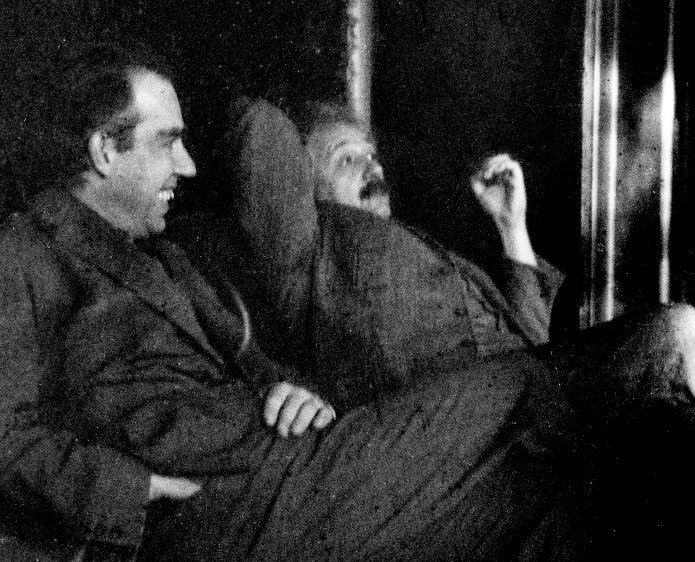
Einstein’s photon theory was a radical departure from classical wave theory and marked a significant step toward the development of quantum mechanics. However, Einstein’s relationship with quantum theory was complex. While he recognized its empirical success, he was deeply troubled by its philosophical implications, particularly the probabilistic and observer-dependent nature of the Copenhagen Interpretation spearheaded by his friend and intellectual rival Niels Bohr.

The Copenhagen Interpretation and Einstein’s Skepticism

The Copenhagen Interpretation, formulated by Niels Bohr and Werner Heisenberg in the 1920s, became the dominant framework for understanding quantum mechanics. It postulates that particles do not have definite properties until they are measured, and that the act of measurement itself affects the system being observed. This interpretation embraces the probabilistic nature of quantum mechanics, rejecting the prevailing deterministic worldview of classical physics (to be discussed in more detail in the next article of this series).

Einstein was deeply uncomfortable with the Copenhagen Interpretation. He famously declared, "God does not play dice with the universe," expressing his belief that the universe operates according to deterministic laws, not probability. Einstein’s skepticism was rooted in his realist worldview, which held that physical reality exists independently of observation. He could not accept the idea that the act of measurement could fundamentally alter the state of a system.

The Einstein-Bohr Debates

Einstein’s challenges to the Copenhagen Interpretation were most vividly expressed in his debates with Niels Bohr (see the picture below of the two together). These intellectual exchanges, which took place at the Solvay Conferences and other scientific gatherings, are among the most famous in the history of physics. Einstein devised a series of thought experiments to demonstrate the incompleteness of quantum mechanics, arguing that the theory failed to provide a complete description of physical reality. 

The EPR Paradox

One of Einstein’s most notable challenges was the EPR paradox, formulated in 1935 with his colleagues Boris Podolsky and Nathan Rosen. The EPR paradox highlighted the phenomenon of quantum entanglement, in which the properties of two particles are correlated in such a way that measuring one particle instantaneously affects the other, regardless of the distance between them. Einstein argued that this "spooky action at a distance" violated the principle of locality, which states that physical processes occurring at one location do not depend on the properties of objects at other locations. He concluded that quantum mechanics must be incomplete, as it could not account for these correlations without invoking non-local effects.

Bohr, however, defended the Copenhagen Interpretation, arguing that quantum mechanics provided a complete and consistent description of reality, even if it departed from classical intuitions. The EPR paradox ultimately led to the development of Bell’s theorem and experimental tests of quantum entanglement, which confirmed the non-local nature of quantum mechanics and supported the Copenhagen Interpretation. Rather paradoxically, the EPR paradox proved to be the death knell of the deterministic view that Einstein had so strongly championed.

Einstein’s Later Years and Legacy

Despite his skepticism, Einstein’s contributions to quantum physics were foundational. His work on the photoelectric effect and his insights into quantum entanglement remain central to the field. However, Einstein’s later years were marked by his pursuit of a unified field theory, which sought to reconcile quantum mechanics with general relativity. This endeavor, though ultimately unsuccessful, reflected Einstein’s unwavering commitment to a deterministic and unified understanding of the universe.

Einstein’s challenges to the Copenhagen Interpretation also had a lasting impact. His critiques spurred further research into the foundations of quantum mechanics and inspired the development of alternative interpretations, such as the many-worlds interpretation and pilot-wave theory. While the Copenhagen Interpretation remains the most widely accepted framework, Einstein’s questions continue to provoke debate and exploration.

Einstein’s Other Contributions to Quantum Physics

Wave-Particle Duality (1909-1916)

Einstein was among the first to argue that light has both wave and particle properties, foreshadowing Louis de Broglie’s wave-particle duality principle. This will be elaborated in a future article. His work helped establish the foundation of quantum field theory.

Einstein Coefficients and Quantum Transitions (1917)

Einstein introduced coefficients that describe how atoms absorb and emit radiation. These coefficients played a major role in quantum electrodynamics and the understanding of atomic transitions, besides paving way for the invention of the laser that happened much later.

Bose-Einstein Statistics and Bose-Einstein Condensate (1924-1925)

Collaborating with Satyendra Nath Bose (see my earlier article on Bose and this historic collaboration), Einstein extended quantum statistics to particles which later came to be known as bosons. This led to the prediction of Bose-Einstein condensation, where particles occupy the same quantum state at extremely low temperatures. This phenomenon was experimentally confirmed in 1995.

Today, Bose-Einstein Condensate (BEC) is recognized as a state of matter in which separate bosonic atoms or subatomic particles, cooled to near absolute zero temperature, coalesce into a single quantum mechanical entity on a near-macroscopic scale. This form of matter was predicted by Einstein in 1924 on the basis of the quantum formulations of Satyendra Nath Bose, foreshadowing the development of Bose-Einstein Statistics applicable to all bosons.


Eric A Cornell and Carl E Wieman (Nobel laureates in Physics, 2001) demonstrated the formation of the Bose-Einstein condensate in ultracold rubidium atoms in 1995. Here, a series of images show, from left to right, increasing density as those rubidium atoms begin to form a BEC. (Image credit: NIST/JILA/CU-Boulder - NIST Image)

Historical Significance of Einstein’s Quantum Contributions:

1. Advancing Quantum Mechanics

Einstein’s work on the photoelectric effect and wave-particle duality was pivotal in the early development of quantum mechanics, laying the groundwork for quantum field theory, quantum electrodynamics, and solid-state physics.

2. Quantum Technologies

His discoveries directly influenced modern technologies, including semiconductors, lasers, and quantum computing. The photoelectric effect is fundamental to solar panels, while Bose-Einstein condensation has applications in quantum simulations and superconductivity.

3. Inspiring the Quantum Revolution

Though Einstein resisted the Copenhagen interpretation, his challenges forced physicists like Bohr, Heisenberg, and Schrödinger to refine quantum mechanics, leading to quantum mechanics' probabilistic framework and further advancements in quantum field theory.

4. Quantum Entanglement and Modern Physics

Einstein’s scepticism about quantum entanglement ultimately led to its experimental verification, which underpins modern quantum information science, including quantum cryptography and quantum computing.

Conclusion

Einstein's contributions to physics transformed our understanding of the universe, from relativity to quantum mechanics. His work on the photoelectric effect launched quantum mechanics, while his debates with Bohr shaped its interpretation. Despite his discomfort with quantum mechanics' indeterminacy, his insights led to foundational developments in quantum physics and modern technology. Today, his contributions continue to influence cutting-edge research in cosmology, particle physics, and quantum computing, making him one of the most significant figures in scientific history.

The bottom-line

Einstein’s image as a "quirky genius" is still widely used in pop culture. The famous E = mc² equation became symbolic of genius itself. In this article, the focus has been on a slightly less well-known equation E = hν that opened up another face of this genius.


Sunday, July 24, 2011

Bose and Einstein – A Historic Collaboration


Preface

Einstein and Tagore, two of the greatest personalities of the last century, found music as a common thread linking them when they met twice in the former's home in Germany in 1930.  When I wrote about this in one of my earlier blog posts (see Tagore and Einstein on Music, Aug 10) some friends pointed out that there was a similar connection between Einstein and another great Bengali personality, Satyendranath Bose, this time the linkage being vastly more enduring and of tremendous importance as well in the history of scientific thought.  They suggested that I touch upon this too without delving too deep into the complexities of the subject matter that provided the linkage.  I had taught Bose-Einstein Statistics very admiringly as well as passionately as part of a Statistical Mechanics course in Physics at the postgraduate level for many years.  Despite this background, I am attempting the task here with considerable misgivings, particularly because of the formidable difficulty in communicating the ideas involved in a non-mathematical language.

Background

At the turn of the twentieth century, the world of Physics had faced a crisis on several fronts because of the failure of its long established theories to explain a number of puzzling discoveries.  It speaks for the outstanding genius of Albert Einstein, a largely self-taught and unknown clerk in a German patent office, that these were all resolved through radically new and revolutionary ideas which gave a refreshingly different direction to the march of science.   The fact that one of the edifices of this revolution was the Special Theory of Relativity in 1905, followed ten years later by the even more important General Theory of Relativity, is well known even among non-scientists.  However, the fact that Einstein was also principally responsible for the other great edifice of the revolution, Quantum Theory, later to develop into Quantum Mechanics, is less well known.   The name of Satyendranath Bose (often shortened as S N Bose) is linked intimately with one of the earliest and most important applications of this theory along with that of Einstein himself, the collaborative result going into the history of science as Bose-Einstein statistics.  As we shall see later, the name of Bose is also permanently enshrined in the annals of Physics as boson, the name used to describe any fundamental entity of nature conforming to the Bose-Einstein statistics.

Particles and Radiation

The term 'particle' is often used to describe entities like molecules (even tightly bound collections of molecules), atoms, nuclei of atoms, components of nuclei which are principally neutrons and protons, electrons, neutrinos and a variety of other entities.  They are all characterized by definite rest masses, i.e., the mass they possess when they are at rest relative to a given frame of reference (if they are in motion with reference to such a frame, their masses increase with their speeds in a manner described by Einstein's Special Theory of Relativity).  They also have other characteristics like electric charge, intrinsic spin, magnetic moment, etc.

The term 'radiation' is used to denote energy emitted or absorbed by matter in the form of 'electromagnetic waves' which travel in vacuum at a constant speed of about 300 000 km/sec (this gets reduced in material media like glass or water in inverse proportion to their optical densities).   They are characterized by a 'frequency' and a 'wavelength' such that the product of these two always gives the speed. Visible light of any color, infrared rays, ultraviolet rays, X rays, gamma rays, microwaves and radio waves are all examples of electromagnetic radiation.  Their behavior is governed by Maxwell's Electromagnetic Theory, just as the behavior of particles is governed by Newton's Laws of Motion (this is true only for low speeds, the behavior of particles at speeds close to that of light being governed by the Theory of Relativity).

Scope of Statistical Mechanics

Let us consider a collection of particles enclosed in a container under normal conditions. These particles will be in constant random motion, often bumping against each other and with the walls of the container, thereby changing their speeds and directions after each collision.  Given a set of initial conditions, these changes can be calculated in principle for each particle and its future course worked out by applying Newton's laws of motion.   However, the number of particles that exist even in the tiniest such container will be so enormously large that it is an inconceivably horrendous task to perform such calculations for each particle individually and thereby work out the consequence for the collection as a whole.  Fortunately however, it is the collective behavior and averaged out properties that would be of paramount interest when considering such a huge collection of particles.  The individual behavior hardly matters if the collective behavior can be understood in some way.  This is where statistical techniques come in handy.
  
Statistical Mechanics was developed in the nineteenth century primarily through the efforts of James Clerk Maxwell in England and Ludwig Boltzmann in Germany.  They applied statistical techniques to a collection of particles under normal conditions and some simplifying assumptions, called an ideal gas, to average out the microscopic dynamics of individual particles and work out their macroscopic (large-scale) thermodynamic features.  This has come to be known as Maxwell-Boltzmann (MB) Statistics.  One important consequence of this exercise was that the temperature of the substance was a measure of the average kinetic energy of the microscopic particles.
   
Radiation and the Ultraviolet Catastrophe

It is common experience that when a body is heated it starts emitting radiation, initially in the form of heat (infrared), and later, as the temperature increases, in the form of visible light varying in color from red to blue. At sufficiently high temperatures it is possible to detect emitted radiation over almost the whole of the electromagnetic spectrum, with an energy distribution characteristic of the temperature.  In thermodynamics, one talks of 'black body radiation', the energy emitted by an idealized entity called the black body.   A black body is visualized as a cavity of matter into which all radiation that falls on it is completely absorbed. This is not to be confused in any way with a 'black hole' which is one of the possible terminal stages of a super massive star in its evolutionary process.  Also, the body does not have to look black in appearance.  The brilliantly bright Sun with a surface temperature of about six thousand degrees can in fact be approximated as a functionally black body.

The distribution of energy in different wavelength (or frequency) ranges at different temperatures of a black body was measured accurately and compared with the predictions made on the basis of Maxwell's electromagnetic theory which postulates the radiation as being emitted or absorbed by natural 'oscillators'.  As shown by the British physicists Rayleigh and Jeans, the energy emitted at any frequency should increase very rapidly with the frequency of the radiation.  This means that there should be no upper limit to the energy and the spectrum of radiation should be swamped by the more energetic radiations corresponding to the higher frequencies at any particular temperature.  This classical theoretical prediction of what came to be known as 'ultraviolet catastrophe' deviates sharply from the experimental observations in which the energy distribution curve goes through a smooth peak after an initial rise and decreases thereafter as the wavelength increases.   This irreconcilable difference between theory and observation was one of the major crises in the world of Physics referred to earlier.

Planck's Remedy

Max Planck of Germany came up with a remedy to the black body radiation crisis by deriving a formula to fit the experimental data perfectly (see figure below for a black body temperature of 5000 K) with a simple and elegant but ad-hoc assumption – that the radiation is emitted by the oscillators only in certain discrete 'quantized' steps and not continuously as was assumed earlier. In doing this he considered the possible ways of distributing electromagnetic energy over the different modes of vibrations of the charged oscillators.  He visualized the energy (E) of such a quantum (later to be called a photon) as proportional to the frequency (n) of the emitted radiation.  This is given by the relation E = hn where h is a constant of proportionality, later to be enshrined as the fundamental and universal Planck's constant.   Planck himself had been troubled by the unsatisfactory nature of his assumption, but it had worked wonders.  If one regards the proof of the pudding as lying in its eating, here was such an unqualified success and so fundamental to the future course of what came to be known as Quantum Physics that Plank was awarded the Nobel Prize for Physics.


The Photon Theory

One of the other crises in Physics at that time was the Photoelectric Effect which went squarely against the wave nature of radiation propounded in the electromagnetic theory.  Experiments had shown that, when light of frequency above a threshold value fell on the surfaces of certain materials, electrons were emitted with energies in proportion to the frequency of the incident radiation.  There was no way this could be reconciled with the well established wave nature of radiation.  Einstein came up with a revolutionary solution to the problem by going well beyond Planck's hypothesis and proposing that radiation is not only emitted in quantized form but also propagated and absorbed as quanta.  In other words, radiation could be thought of as existing as discrete packets or 'particles of energy' just as one could think of particles of matter like electrons and protons.  The energy of such a quantum of radiation corresponded to Planck's relation E = hn.

Einstein's simple and successful explanation of the Photoelectric Effect brought him a Nobel Prize for Physics in 1921, greatly overshadowing his vastly more important theories of relativity.

The photon theory opened up a new dilemma.  Though conceptually very different, the electromagnetic theory and photon theory had their respective domains of unquestionable success in explaining well known phenomena – like diffraction, interference, polarization, etc., by the wave theory and Photoelectric Effect, Compton Effect, etc., by the photon theory.   The subsequent discovery of other phenomena like electron diffraction (which is the basis for the revolutionary electron microscope), in which traditional particulate matter shows up a distinctly wave nature under certain conditions, uncovered a deep rooted duality in the very make up of nature, validating both the particle and wave pictures.  This duality is at the heart of the new Quantum Mechanics that was developed later by the efforts of great minds like Heisenberg, Schrodinger, Dirac and a host of others. 

Quantum Properties

Maxwell-Boltzmann statistics is successful in predicting the macroscopic properties of aggregates of particles like atoms or molecules in a gas to which Newton's laws can be applied in principle.  Such particles are distinguishable from each other, at least in principle, the same way that a set of identical looking table tennis balls can be distinguished from each other by leaving an identifying mark on each.  In contrast, two or more identical particles such as electrons, photons or nucleons obeying quantum laws cannot be so distinguished even in principle.  This fundamental distinction between classical and quantum particles first came to light from the path-breaking work of S N Bose as we shall see later and produces radically different results when statistical techniques are applied to the two classes of particles.  We need a quantum mechanical formulation of statistical mechanics applicable to particles that are indistinguishable even in principle. This was contributed by Bose and Einstein for one type of particles and later by Fermi and Dirac for another type.

Spin (intrinsic angular momentum) is a property applicable to both classical and quantum particles, but with different connotations.  The spin associated with a classical particle is very much like the spinning motion of a top or the rotation of the Earth about an axis embedded within it.  The spin of a quantum particle is somewhat analogous to such rotational motion of macroscopic objects, but is quantized just like its energy.  It can only be an integral or half-integral multiple of a fundamental unit which involves, not surprisingly, the Planck constant h.  Also, the classical analogy fails completely when attributing spin to an entity like the electron which is viewed as just a point mass.

We need to make a distinction between two types of quantum particles – photons i.e., quantized packets or particles of energy that are massless and 'material' particles like electrons, nucleons, mesons, etc., that have a finite rest mass.  Photons and the other quantum particles are different in one other major respect.  Photons can be created or destroyed and their number is not conserved, unlike the other quantum particles. 

The Exclusion Principle

As emerged from the work of Planck and Einstein any quantum particle can have only discrete (quantized) energy states and, as may be expected, they tend to occupy the lowest energy states at any given temperature.  In general, the lower the temperature the lower the energy.  According to classical mechanics, the energy is zero at absolute zero temperature. However, this is not so for quantum particles.  Quantum Mechanics leads to the finding that even at absolute zero temperature a quantum particle should have a non-zero value, called the zero point energy.

The state of a particle can be described by assigning various quantum 'numbers' characteristic of the particle in that state; these numbers correspond to the energy, charge, spin, magnetic moment, etc.  It is now opportune to introduce one of the most fundamental principles of quantum behavior, discovered by Wolfgang Pauli.  According to this, no two particles with identical quantum numbers can exist in the same state if they have half-integral spins.  This has come to be known as the Exclusion Principle.  Particles of half integral spin, necessarily obeying this principle, have come to be known as fermions in honor of the great Italian physicist Enrico Fermi who first elucidated their statistical behavior.

In contrast, particles with integral or zero spin, including photons, are excluded by nature from the exclusion principle and any number of such particles can occupy the same state. Such particles have come to be known as bosons in honor of S N Bose. This fundamental distinction between bosons and fermions has far reaching consequences as we shall see later.

The Bose-Einstein Connection

Along with great luminaries like J C Bose, P C Ray, C V Raman, Meghnad Saha and others, Satyendranath Bose belonged to the golden era of early twentieth century Science most of which flourished in pre-independence Bengal, the cradle of Indian science.  Though brilliant in both Physics and Mathematics, he was a multi-faceted personality, with deep rooted interests in literature, arts and music. Even within the domain of Physics he did notable work in both theoretical and experimental areas, a fact that is not reflected adequately in terms of the number of research papers to his credit. He followed with keen interest the revolutionary new developments of contemporary science in Europe, particularly the works of the legendary Einstein for whom he developed great respect and reverence in characteristic Indian intellectual tradition.   Good at both German and French, he translated and published Einstein's original scientific papers in English and this was how most Indian scientists got to know about Einstein's work.

Bose visualized black body radiation as a gas of photons, similar to a gas of classical particles obeying Maxwell-Boltzmann statistics, and tried to apply similar techniques to derive the immensely successful Planck's radiation formula in a manner radically different from what Planck himself had done.   In counting the energy states of the photons Bose stumbled upon the property of indistinguishability in a fortuitous way.  A highly simplistic analogy may help to clarify this. If two objects are labeled A and B, their combinations AB and BA are treated as different entities in the MB formalism.  Apparently Bose made the 'mistake' of treating them as the same, and this is what basically led him to a derivation of the correct formula for the distribution of photon energies, viz., Planck's formula.  Though it was much later that he realized the revolutionary and true meaning of his methodology, Bose's euphoria was understandable.  He had derived Planck's formula bereft of the ad hoc and unsatisfactory nature of Planck's assumptions and based on Einstein's photon concept. 

Bose's persistent efforts to get his discovery published by any reputed science journal proved futile.   Apparently, he was way ahead of his times with an idea few could even understand during those days.  There must have been a lot of skepticism about something like this coming from an unknown native of a country that was equally unknown in the scientific world.  In despair, Bose hit upon an idea almost as daring as the one he was trying to publicize.  He mustered enough courage to communicate his work to the one person he most admired professionally and upon whose work it was partly based – the great Einstein himself, by then an international celebrity and whom Bose always regarded as a great master.  Here is his covering letter, in his own hand:


For those who may find it difficult to decipher the handwriting, here is the text of the historic letter:


Einstein was highly impressed and his response to Bose's plea was as decisive as it was prompt. He translated Bose's paper into German and sent it for publication with his comment:"...Bose's derivation of Planck's formula appears to me to be an important step forward. The method used here gives also the quantum theory of an ideal gas, as I shall show elsewhere". Bose's paper, translated under the title Plancks Gesetz und Lichtquanten-hypothese, was published in the August 1924 issue of the renowned German journal Zeitschrift fur Physik. 

Einstein, the genius that he was, understood the implication of Bose seminal work even better than the originator himself.  While Bose had applied a new statistical technique for the understanding of a photon gas, Einstein realized that it could be generalized and applied even to material particles that had an integral spin; in other words, to all bosons. He published this work a few months later.  The resulting theoretical edifice has come to be known as Bose-Einstein statistics and is one of the cornerstones of all of Quantum Physics, on par with Fermi-Dirac statistics.

One of Bose's great ambitions was realized when he managed to spend two years in France and Germany, meeting and working with some towering personalities of the time, including Marie Curie, Paul Langevin, Louis de Broglie, Lise Meitner, Wolfgang Pauli and Werner Heisenberg.  Of course the most memorable of these was his association in Berlin with the master himself, Albert Einstein. 

Birds of the same feather flocking together...

Nature's exclusion of bosons from Pauli's exclusion principle results in some startling consequences when applied to material particles as we shall now examine.

In view of the fact that helium atoms have zero spin, they also would behave like a photon gas. Bose-Einstein statistics can then be applied to study their behavior. In the case of photons, the total number of particles actually decreases as we decrease the total energy of the system (equivalently, as we lower the temperature). However, if we apply BE statistics to a gas of helium atoms in an enclosure, we must obviously keep the number of atoms fixed as the temperature varies. So the precise formula for the number of atoms in a state of specified energy would be different from what Bose used in the case of photons. As the temperature is lowered, more and more particles pile up on each other and crowd together into the (same) lowest energy state (For the gas of photons, they just disappear from the system). At an extremely low temperature, but one which is still just above absolute zero, the number of particles in the lowest state becomes enormously large.  Practically all the particles should be found at this energy level.  Here we have bosons behaving like birds of the same feather all flocking together!  The state of matter corresponding to such a situation is called a bose condensate.  The prediction of such an extraordinary phase of matter remained largely a theoretical curiosity until the end of the twentieth century. 

The phenomenon of superconductivity dramatically illustrates the differences between systems of quantum mechanical particles that obey BE statistics instead of Fermi-Dirac statistics. At room temperature, electrons, which have one-half spin, are distributed among their possible energy states according to FD statistics. At very low temperatures, the electrons pair up to form spin-zero electron pairs which behave as bosons, and promptly condense into the same ground state. A large energy gap between this ground state and the first excited state ensures that any electrical current is “frozen in.” This causes the current to flow through without resistance; this is one of the defining properties of superconducting materials.

 ...and singing together

To achieve Bose-Einstein condensation, a boson gas must be cooled to considerably less than one millionth of a degree above absolute zero. After some historic experimental breakthroughs by several research teams this was finally achieved in 1995 by two American physicists, Eric Cornell and Carl Weiman. A pure bose condensate of about 2000 rubidium atoms at an unbelievably low temperature of 20 nK, i.e. two billionths of a degree above absolute zero, was achieved.  The atoms were shown to lose their individual identities and behave as though they were a single “super atom” for a full ten seconds. The atoms’ physical properties, such as their motions, became identical to one another.

Another American physicist Wolfgang Ketterle worked independently of Cornell and Wieman, and reported large condensates of sodium atoms. Ketterle was also able to extract a beam of coherent matter (much like a laser beam which is coherent radiation) from the condensate, thus achieving the first ever atom laser. When a gas consisting of uncoordinated atoms turns into a Bose-Einstein condensate, it is very much like various instruments of an orchestra all joining to produce the same tone perfectly synchronously.  Here we have bosons not only behaving like birds that are flocking together, but also singing together...the same note and all in unison!

Postscript

A large number of scientists have received the Nobel Prize for highly significant and path breaking work based on or connected with Bose-Einstein statistics.  The list includes Cornell, Weiman and Ketterley for their experimental work.  Paradoxically, the only name missing from such a list is that of Satyendranath Bose himself.  What an irony that his work was not considered worthy of such recognition! A similar fate befell the other great Bose of Bengal – Jagadish Chandra Bose, for his discovery of radio communication (he should have at least shared the prize that was given to Marconi).  It is of considerable comfort to all Indians that C V Raman didn't share such a fate!

Unfortunately, Nobel prizes are not awarded posthumously.  If I could travel back in time and set right some of the anomalies and injustices in the award of Nobel prizes for scientific achievement, I would give a Nobel Prize in Physics jointly to Bose and Einstein for their historic contributions.  Would I like to take away Einstein's award for the Photoelectric Effect? No, not all!  On the contrary, I would give him a third one for his work on Relativity, the one that he most deserves!

Blog Archive